


The Hora Dance at Jewish Weddings: History, Songs, and How to Dance It
Last updated October 2026
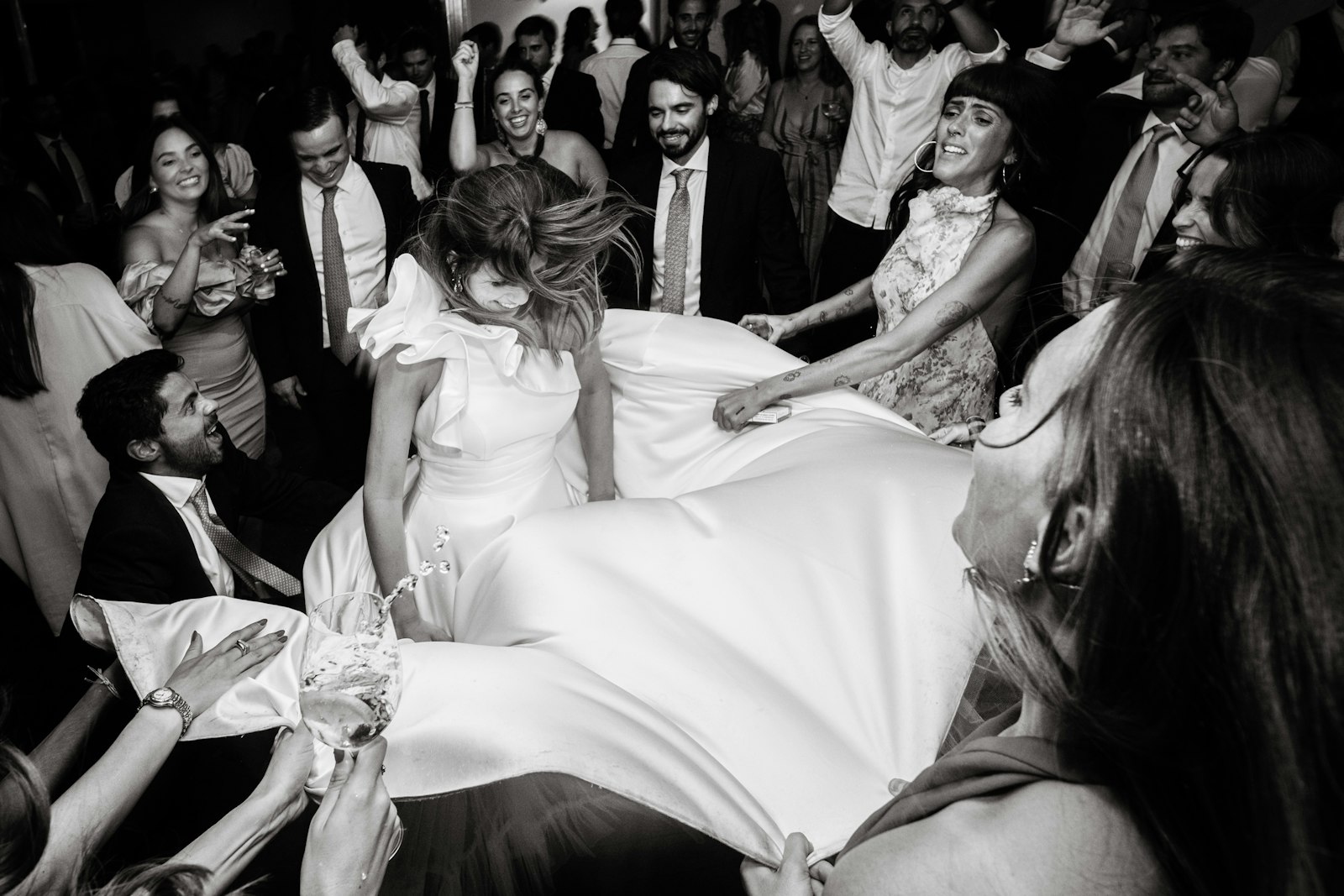
The hora is the circle dance at the heart of a Jewish wedding reception. Guests link hands and dance around the newlyweds, then a few strong friends lift the couple up on chairs while the band or DJ plays Hava Nagila. It is loud, sweaty, and joyful, and for many families it is the moment they remember most.
Our DJs have played the hora at Jewish weddings across Boston, New York City, and New England for years. This guide covers where the dance comes from, the songs you will hear, who gets lifted, and how to plan the hora with your DJ so it runs on schedule.

What Is the Hora Dance?
The hora is a traditional circle dance. At a Jewish wedding, guests join hands in one or more rings and move around the couple in the center, often with a grapevine or step-kick pattern. As the music builds, guests raise the couple into the air on chairs. The two partners often hold opposite ends of a handkerchief or cloth napkin between them, a small gesture that connects them above the crowd.
You may hear it called the chair dance, the hora dance, or “the chairs.” The Jewish wedding hora belongs to a larger family of Jewish wedding dancing that can also include the mezinke for parents and, at more traditional weddings, dances where guests perform for the couple.
History of the Hora: Where the Dance Comes From
The hora started as a folk dance in Romania and Moldova. Related circle dances appear across the Balkans and southeastern Europe, including the Bulgarian horo and variants in Greece, North Macedonia, and Turkey. The name comes from the Greek word choros, meaning “dance,” the same root as “chorus” and “choreography.” In Romania, the “Hora of the Union” became a patriotic song when Wallachia and Moldavia united in 1859, and Romanian dancers still perform the hora at weddings and other celebrations.
Ashkenazi Jewish communities in the region danced their own horah to klezmer music, and the Jewish hora took its modern shape in the early 20th century. In 1924 the Romanian-born dancer and choreographer Baruch Agadati created a dance based on the Romanian hora that became known as the Hora Agadati. The Ohel theater troupe performed it for pioneer settlements in the Jezreel Valley, and the hora became a symbol of early Zionist culture and the foundation of Israeli folk dance. Jewish families in the United States carried the Israeli hora into weddings, bar and bat mitzvahs, and holidays.
Is It Hora or Horah?
Both spellings are correct. “Hora” is the common English spelling, and “horah” follows the Hebrew and Yiddish transliteration. You will see both on wedding programs and playlists.
How to Dance the Hora
You do not need lessons. Guests join hands or link arms at the shoulder and form a circle around the couple. The circle moves counterclockwise, and dancers follow a short repeating pattern:
- Step to the side with your left foot.
- Cross your right foot behind your left.
- Step left again, then kick or hop on each foot as the circle keeps moving.
The Romanian version uses three steps forward and one step back. At a big wedding, guests often form concentric circles, with the inner ring moving one direction and the outer ring the other. As the tempo climbs, the circles speed up, and the lifters head to the center for the chairs.
Hava Nagila and Other Hora Dance Songs
Hava Nagila is the song most people connect with the hora. The title means “Let us rejoice.” According to the song’s history, Abraham Zvi Idelsohn and his students set Hebrew words to a Hasidic melody from the Sadigura community in 1918, and a choir first performed it in Jerusalem. Hava Nagila spread through the Jewish diaspora within a few decades and remains the standard opening song for the hora.
The hora and Hava Nagila are two different things: the hora is the dance, and Hava Nagila is the song guests sing and dance to. Your DJ can build a hora medley around it. Common additions include:
- Siman Tov u’Mazel Tov, the classic congratulations song
- Od Yishama, with words from the last of the sheva brachot (seven blessings)
- Hevenu Shalom Aleichem
- Modern Israeli or Jewish pop tracks if your crowd wants a faster tempo at the end
Our go-to hora track is a medley of about 10 minutes that starts with Hava Nagila and moves through several classic Jewish party songs. Your DJ can loop it without a break if the dance floor wants more. If you have a family favorite, send it to your DJ ahead of time so it lands in the right spot.
The Chair Dance: Who Gets Lifted on Chairs
Many families describe the chair lift as raising the couple up like royalty for the night, surrounded by their community. The couple goes up first, each on their own chair and holding a handkerchief between them. After that, families choose their own order. Parents are the most common next pick, followed by siblings, grandparents who are comfortable with it, and sometimes the wedding party. Some couples add anyone celebrating a milestone that year.

Who does the lifting?
Plan on several guests per chair, with a few more standing by to swap in. Pick friends and cousins you trust, and tell them before the wedding so they are on the dance floor when the music starts. Other guests often jump in on their own once the chairs go up.
Chair and safety tips
- Ask your venue or caterer for sturdy chairs without arms. Light folding chairs flex under weight.
- Tell the person going up to sit back and hold the seat edge.
- Ask the lifters to keep the chair at shoulder height unless they have done this before.
- Clear drinks and centerpieces from the edge of the dance floor.
The Mezinke: A Hora for Parents
When parents marry off their last child, many families add the mezinke (also spelled mizinke). The parents sit in the center of the circle, guests crown them with flowers or wreaths, and everyone dances around them to “Di Mizinke Oysgegebn.” It often follows the hora or comes later in the evening. Let your DJ know early if you plan to include it, since the song is not on standard playlists.
When to Do the Hora at Your Reception
You can place the hora anywhere in the evening. Three spots work best:
- Right after your grand entrance. Guests are fresh and the room is full. Pair it with a high-energy grand entrance and go straight into the circle.
- After the first dance, before the first course. This gives the room a burst of energy before everyone sits down.
- After dinner. Many of our couples do the parent dances at the end of dinner and then go straight into the hora. It opens the dance floor for the rest of the night.
Talk to your venue coordinator and caterer about timing. The hora can leave guests out of breath, so plan water at the bar and give the kitchen a heads-up if the dance comes before a course.
How Long Does the Hora Last?
The hora runs anywhere from 5 to 20 minutes, depending on the size of the wedding and how many people go up on chairs. A small, low-key wedding might wrap in five minutes. A large reception with a long list of lifts can run 20 minutes or more.
You have three ways to control the length:
- Let your DJ read the room and wrap up when energy dips.
- Give a signal to your DJ, or assign a member of the wedding party to give it for you.
- Set a fixed length in advance so the timeline stays on track.
Traditional and Modern Hora Variations
At Orthodox and some traditional weddings, men and women dance the hora in separate circles, often divided by a mechitza (partition). The couple may be lifted in their own circles before being brought together. At most Reform, Conservative, and secular Jewish weddings, men and women dance together in one or more mixed rings.
Interfaith couples often include the hora as a way to honor one family’s traditions and give every guest something to join. You can keep it short, explain it in your program, or have your DJ or MC invite everyone to the floor with a quick introduction.
Planning the Hora With Your DJ or Band
Some couples hire a klezmer band or live band for the hora, and many use a DJ for the whole reception. Either way, your DJ or MC runs the hora from cue to finish, so cover these details during your planning call:
- Timing: where the hora falls in your reception playlist and timeline
- Songs: Hava Nagila plus any family favorites, and whether to include the mezinke
- The lift list: who goes up and in what order, so the MC can call names
- Length: read the room, signal, or a fixed time
- Photographer cue: the chairs go up fast, so your photographer should know the timing
If your ceremony includes other traditions, read our guide to signing the ketubah to plan the rest of the day.
Lighting and Photo Booth Ideas for the Hora
The hora produces some of the best photos of the night, and lighting makes a big difference. Dance floor lighting and color washes on the walls give your photographer more to work with once the chairs go up. Our Wedding Uplighting 101 guide explains how uplighting changes a room and how to pick colors.
After the hora, guests are energized and ready to celebrate. A photo booth near the dance floor gives them somewhere to go between songs and gives you a set of prints from the night.
Sunday and Winter Jewish Weddings
Shabbat runs from Friday at sundown to Saturday at nightfall, so many Jewish couples plan Sunday weddings or Saturday-night receptions in late fall and winter, when Shabbat ends early. These dates tend to have more availability for venues and vendors than peak summer Saturdays. If you are flexible on your date, ask us which Sundays and winter weekends are still open.
Plan Your Hora With Beat Train
Beat Train Productions provides wedding DJs and MCs in Boston, New York City, and across New England. We will help you plan the hora, the mezinke, and the music for the rest of your night. Schedule a call with our team to check your date and start planning.